


European Portuguese for expats in Portugal is most useful when it helps you deal with real daily situations: ordering coffee, speaking to neighbours, booking appointments, asking for help and understanding local services.
My guide to Portuguese for daily life in Portugal explores these everyday situations through useful phrases and practical communication strategies.
Many expats can use English in Lisbon, Porto and tourist areas. But daily life in Portugal becomes easier, friendlier and less stressful when you can use even basic Portuguese.
If you have ever studied Portuguese but frozen when someone speaks to you in real life, you are not alone. Many adult learners feel this way, especially at the beginning.
This guide is for foreigners living in Portugal or planning to move here. You will learn useful phrases, common situations, typical difficulties and practical ways to build confidence with European Portuguese.
As a European Portuguese tutor, I often work with adult learners who understand some Portuguese but feel blocked when they need to speak. This article will help you start using Portuguese in a simple, realistic way.
- At a Glance
- Why European Portuguese Matters for Expats in Portugal
- Essential European Portuguese Phrases for Expats
- Portuguese for Daily Life in Portugal
- Common Difficulties for Expats Learning Portuguese
- Best Ways to Learn European Portuguese as an Expat
- Common Mistakes Beginners Make
- How to Practise European Portuguese for Expats in Portugal
- Want to Practise with a European Portuguese Tutor?
- See Also
- Final Thoughts
- FAQ
- About the Author
Some links on this website may be affiliate or referral links. If you use them, I may receive a small commission or reward, at no extra cost to you.
I only recommend resources, tools, and services that I believe may be helpful for learning European Portuguese. These links help support the website, but they do not influence the advice or learning guidance I share.
At a Glance
- Learn practical European Portuguese for expats in Portugal.
- Use phrases for cafés, shops, appointments, neighbours and public services.
- Understand why European Portuguese is different from Brazilian Portuguese.
- Avoid common beginner mistakes.
- Build confidence through real-life speaking practice.
- See how a trial lesson on Preply can help you practise with guidance.
Why European Portuguese Matters for Expats in Portugal
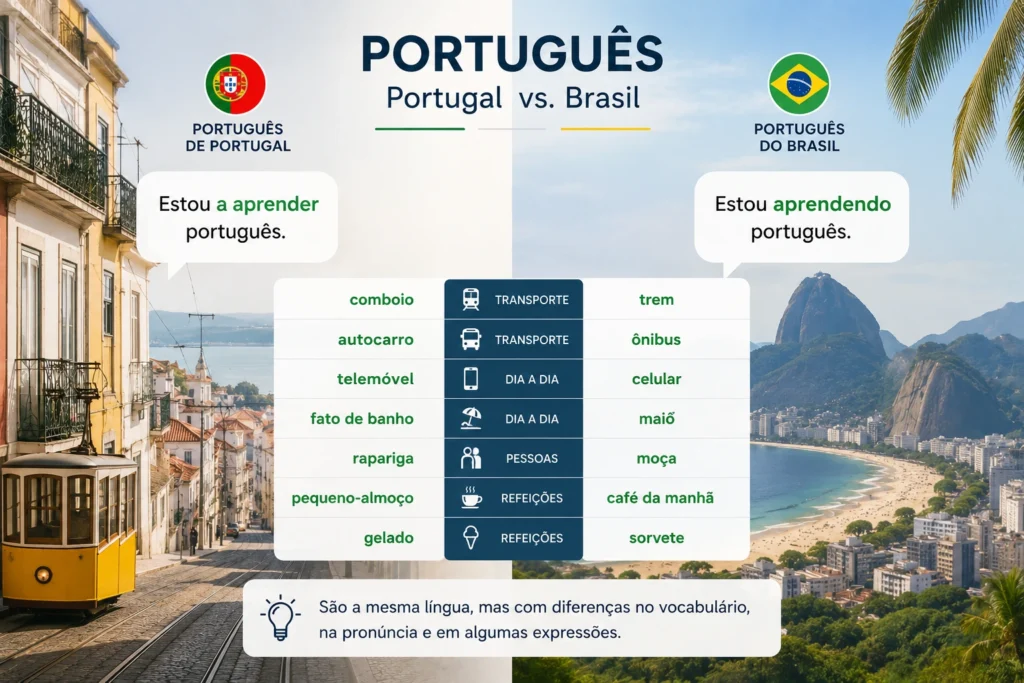
If you live in Portugal, European Portuguese is the version you hear around you every day.
Many apps and online resources mainly teach Brazilian Portuguese. Brazilian Portuguese is widely understood, but it sounds different from European Portuguese and sometimes uses different words or structures.
For example:
European Portuguese:
Estou a aprender português.
Autocarro.
Telemóvel.
Brazilian Portuguese:
Estou aprendendo português.
Ônibus.
Celular.
Both versions are valid, but if your goal is to speak with people in Portugal, understand local pronunciation and feel more comfortable in everyday situations, it makes sense to focus on Portuguese from Portugal.
You can explore the main differences in vocabulary, pronunciation and everyday usage in European Portuguese vs Brazilian Portuguese.
Learning European Portuguese helps you understand what people actually say in cafés, shops, clinics, public services and conversations with neighbours.
Essential European Portuguese Phrases for Expats
These phrases are simple, useful and natural in Portugal. You do not need perfect grammar to start using them.
If you are starting from the beginning, this European Portuguese guide for beginners will help you choose the first phrases, pronunciation features and grammar structures to learn.
Bom dia.
Meaning: Good morning.
Use this when entering cafés, shops, pharmacies or offices.
Example:
Bom dia, queria um café, por favor.
Fala inglês?
Meaning: Do you speak English?
Use this when you need help and feel stuck.
Example:
Desculpe, fala inglês?
Queria marcar uma consulta.
Meaning: I would like to book an appointment.
Useful for doctors, dentists, clinics and services.
Example:
Boa tarde, queria marcar uma consulta para a próxima semana.
Quanto custa?
Meaning: How much does it cost?
Useful in shops, markets and services.
Example:
Quanto custa este pão?
Pode ajudar-me?
Meaning: Can you help me?
A simple and very useful phrase.
Example:
Desculpe, pode ajudar-me?
Tenho uma dúvida.
Meaning: I have a question.
Very common in Portugal when asking for clarification.
Example:
Tenho uma dúvida sobre este documento.
Tenho uma marcação.
Meaning: I have an appointment.
Useful at clinics, offices, banks and public services.
Example:
Bom dia, tenho uma marcação às dez horas.
A conta, por favor.
Meaning: The bill, please.
Useful in cafés and restaurants.
Example:
Desculpe, a conta, por favor.
Estou à procura de apartamento.
Meaning: I am looking for an apartment.
Useful for housing conversations.
Example:
Estou à procura de apartamento nesta zona.
Obrigado / Obrigada.
Meaning: Thank you.
Use obrigado if you are male and obrigada if you are female.
Portuguese for Daily Life in Portugal
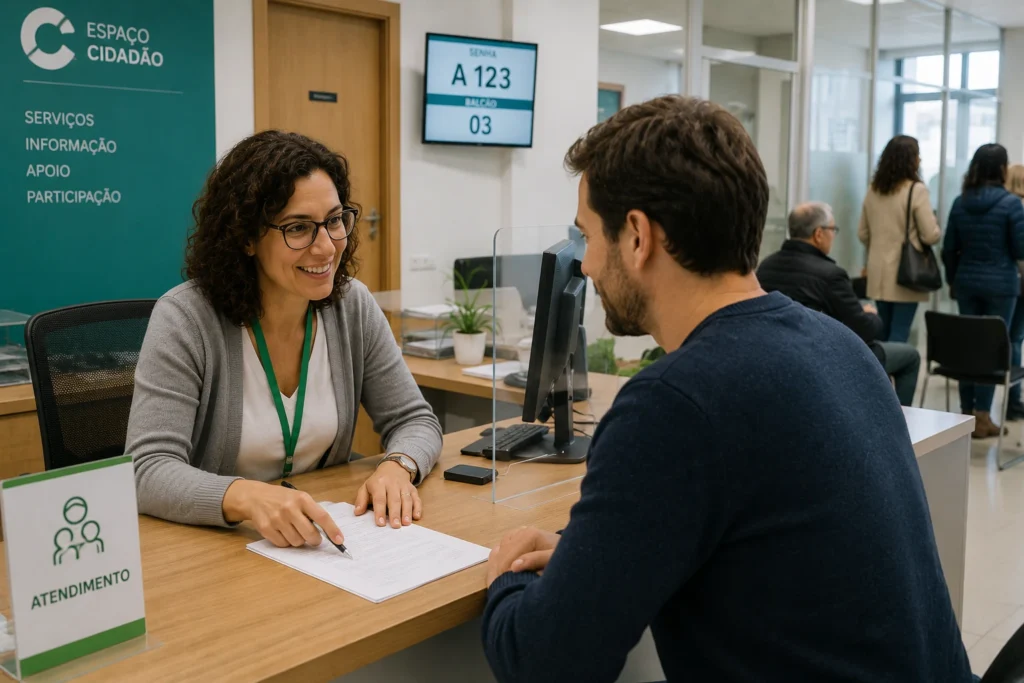
Portuguese for daily life in Portugal does not need to be complicated. Start with the situations you face most often.
For many expats, this means cafés, restaurants, supermarkets, pharmacies, doctors, public services, landlords and neighbours.
At Cafés and Restaurants
Portugal has a strong café culture, so ordering confidently is one of the first practical wins.
Useful words:
- café = espresso coffee
- meia de leite = coffee with milk
- galão = milky coffee served in a glass
- pastel de nata = custard tart
- água sem gás = still water
- água com gás = sparkling water
Example:
Queria um café e um pastel de nata, por favor.
Another useful example:
Queria uma água sem gás e uma sandes, por favor.
You can also use:
A conta, por favor.
This is simple, polite and natural.
At Public Services
Expats often need Portuguese for healthcare, banking, housing, tax offices and local administration.
Useful phrases:
- Tenho uma marcação.
- Tenho uma dúvida sobre este documento.
- Pode repetir, por favor?
- Pode falar mais devagar?
- Preciso de ajuda com este formulário.
Example:
Bom dia, tenho uma marcação às dez horas.
Another example:
Tenho uma dúvida sobre este documento. Pode ajudar-me?
In my lessons with expats, public service situations are very common practice topics because learners often feel nervous when there is paperwork, appointments or official language involved.
At the Pharmacy
Pharmacies are part of everyday life in Portugal, and even basic Portuguese can help you explain what you need.
Useful phrases:
- Preciso de alguma coisa para a dor de cabeça.
- Tenho tosse.
- Tenho febre.
- Tem isto?
- Como devo tomar?
Example:
Bom dia, preciso de alguma coisa para a dor de cabeça, por favor.
You do not need advanced Portuguese. Short, clear phrases are often enough.
Common Difficulties for Expats Learning Portuguese
Learning European Portuguese for expats in Portugal is not only about vocabulary. Many learners struggle because they can read or understand some Portuguese, but speaking feels much harder.
This is normal.
European Portuguese Sounds Fast
European Portuguese pronunciation can feel difficult because natural speech often sounds fast and some vowels are reduced.
My European Portuguese pronunciation guide explains vowel reduction, nasal sounds, connected speech and other features that can make Portuguese from Portugal difficult to recognise at first.
This can feel discouraging when you have studied vocabulary but still struggle to understand people in cafés, shops or appointments.
Many learners understand written Portuguese before they understand spoken Portuguese well.
A useful approach is to listen to short, natural conversations every day and repeat useful phrases aloud. Do not try to understand every word at first. Start by recognising useful expressions.
Fear of Making Mistakes
Many expats avoid speaking because they worry about pronunciation, grammar or feeling embarrassed in public.
If this happens to you, it does not mean you are bad at languages. It usually means you need more calm, guided speaking practice in situations that feel relevant to your life.
But communication matters more than perfection.
Most Portuguese people appreciate the effort, even if your Portuguese is basic. A simple phrase said with confidence is often more useful than a perfect sentence that you are too afraid to say.
In my lessons with adult learners, I often see that students know more Portuguese than they think. The main problem is not always grammar. Very often, it is lack of speaking practice in realistic situations.
If English is your main support language, recognising some of the common mistakes English speakers make in European Portuguese can also help you understand which patterns need focused practice.
People Replying in English
Locals may switch to English to help you. This can be helpful, but it can also feel frustrating when you are trying to practise Portuguese and build confidence.
You can say:
Podemos falar português devagar?
Meaning:
Can we speak Portuguese slowly?
This is polite, clear and useful.
Many of my students experience this in cafés, shops and appointments. In lessons, we practise simple ways to continue the conversation in Portuguese without feeling uncomfortable.
Best Ways to Learn European Portuguese as an Expat
The best way to learn Portuguese depends on your life, your goals and how often you can practise. But for most expats, the most useful approach is practical and consistent.
If you are studying remotely, this guide explains how to learn European Portuguese online for real life in Portugal by combining listening, practical grammar and active speaking.
Start with Useful Phrases
Do not wait until you understand all the grammar. Start with phrases you can use immediately.
Focus on:
- greetings
- daily questions
- appointment phrases
- shopping phrases
- pharmacy phrases
- housing phrases
- common verbs
For example:
Tenho uma pergunta.
Tenho uma consulta amanhã.
Tenho de ir ao banco.
Queria marcar uma consulta.
These phrases help you communicate quickly, even as a beginner.
Practise in Real Situations
Use Portuguese in your normal routine.
You can:
- order coffee in Portuguese
- greet neighbours
- ask for prices at the market
- book appointments by phone
- ask for directions
- speak at the pharmacy
- ask simple questions in shops
Small daily practice is more effective than occasional long study sessions.
One useful goal is to use Portuguese once a day, even if it is only one sentence.
Listen Every Day
Try 10 to 15 minutes of European Portuguese listening each day.
Useful options include:
- Portuguese radio
- RTP programmes
- podcasts from Portugal
- short videos from Portugal
- real conversations with locals
At first, focus on rhythm and familiar words. Understanding spoken Portuguese takes time, especially because European Portuguese pronunciation can sound closed or fast to beginners.
Focus on Speaking
Many learners understand more than they can say. Speaking practice helps you react naturally instead of translating in your head.
These strategies for practising spoken European Portuguese can help you turn passive knowledge into language you can use more spontaneously.
A 1-to-1 European Portuguese lesson can be useful if you want feedback on pronunciation, sentence structure and real-life situations.
As a European Portuguese tutor, I usually help learners practise the exact situations they face in Portugal: ordering coffee, speaking to neighbours, calling a clinic, asking questions at public services or explaining a simple problem at a pharmacy.
Common Mistakes Beginners Make
Avoiding these mistakes can save time and frustration.
Learning Only Brazilian Portuguese
Brazilian Portuguese is useful, but it may not prepare you for the way people speak in Portugal.
Check whether your course, app or teacher focuses on European Portuguese.
Duolingo is a common example of an app that does not offer a dedicated European Portuguese course. If you use it, read Is Duolingo Good for European Portuguese? to understand what it can offer and where you may need additional resources.
This is especially important for pronunciation, everyday vocabulary and common structures.
For example:
European Portuguese:
Estou a aprender português.
Brazilian Portuguese:
Estou aprendendo português.
If you live in Portugal, focus on the version you hear around you.
Translating Word for Word
Portuguese often works differently from English.
English:
I am learning Portuguese.
European Portuguese:
Estou a aprender português.
Another example:
English:
I am 45 years old.
European Portuguese:
Tenho 45 anos.
Not:
Sou 45 anos.
Learning full phrases helps you speak more naturally and avoid common translation mistakes.
My guide to European Portuguese grammar for beginners explains essential structures through practical examples instead of isolated rules.
Waiting Too Long to Speak
You do not need perfect grammar before speaking.
Basic Portuguese used regularly will help you improve faster than silent study alone.
Start with short phrases:
Bom dia.
Queria um café, por favor.
Tenho uma dúvida.
Pode repetir, por favor?
Confidence grows through use, not only study.
Studying Too Much Without Real Practice
Books, apps and grammar exercises can help, but they are not enough on their own.
If your goal is to live more comfortably in Portugal, you need to practise real communication.
That means speaking, listening, making mistakes, correcting them and trying again.
How to Practise European Portuguese for Expats in Portugal
A simple routine can help you make steady progress without feeling overwhelmed.
Every Day
Learn 3 useful phrases.
Listen to 10 minutes of European Portuguese.
Use Portuguese once in a real situation.
Repeat one phrase aloud several times.
Write down one word or phrase you heard during the day.
Every Week
Have one longer conversation.
Review the phrases you actually used.
Practise one situation you find difficult.
Listen again to something you found hard.
Prepare useful phrases for the week ahead.
For example, if you have a doctor’s appointment, practise:
Tenho uma consulta amanhã.
Tenho uma dor aqui.
Pode repetir, por favor?
Como devo tomar isto?
Focus on the Portuguese you need most in your own life in Portugal.
Progress takes time and does not follow the same calendar for every learner. How Long Does It Take to Learn European Portuguese? will help you set expectations based on your goals, study frequency and opportunities to use the language.
Want to Practise with a European Portuguese Tutor?

Private European Portuguese lessons for expats can help you move from understanding Portuguese to actually speaking it in daily life.
You may already know more Portuguese than you think. The next step is learning how to use it calmly in real conversations.
In my lessons, we can practise real situations such as ordering coffee, booking appointments, speaking to neighbours, asking questions at public services and improving your pronunciation.
You do not need to speak perfectly before starting. A trial lesson is a good way to see your level, understand what you need most and practise Portuguese in a calm, guided way.
If you want calm, guided speaking practice, you can book a trial lesson with me on Preply. We can practise the real-life Portuguese you need in Portugal, at your pace, without pressure.
See Also
Continue learning with these related guides:
- Portuguese for Daily Life in Portugal — prepare for cafés, appointments, neighbours and everyday services.
- European Portuguese for Beginners — start with essential phrases, pronunciation and grammar.
- European Portuguese vs Brazilian Portuguese — understand which variety best matches life in Portugal.
- European Portuguese Pronunciation Guide — practise sounds, vowel reduction and natural speech.
- How to Practise Speaking European Portuguese — develop confidence and respond more spontaneously.
- Is European Portuguese Hard to Learn? — understand common challenges and how to manage them.
Final Thoughts
European Portuguese for expats in Portugal should be practical, realistic and connected to daily life.
You do not need to speak perfectly to begin. Start with small phrases, use them often and build confidence through real conversations.
If you live in Portugal, you probably do not need abstract grammar first. You need the confidence to speak in the situations that happen every week: cafés, appointments, shops, neighbours, phone calls and public services.
If you want personal guidance, a trial lesson on Preply can help you understand your level, practise useful phrases and start speaking Portuguese with more confidence.
FAQ
About the Author

Isabel M.
Native European Portuguese Tutor | Founder of Practical Portuguese
Hi, I’m Isabel, a native European Portuguese tutor from Portugal and the founder of Practical Portuguese.
I help adults learn authentic European Portuguese through structured, personalised online lessons. My lessons are taught mainly in Portuguese, with support in English whenever needed. I teach students from complete beginner to advanced levels, focusing on practical communication for everyday life, family, travel and work in Portugal.
Every article on Practical Portuguese combines natural language as it is spoken in Portugal with my experience teaching adult learners from different language backgrounds.
Why Learn with Me?
✔ Native European Portuguese speaker from Portugal
✔ Lessons taught in Portuguese with support in English
✔ Experience teaching adults from different language backgrounds
✔ Personalised one-to-one online lessons
✔ Practical Portuguese for everyday life, family, travel and work in Portugal
✔ Lessons adapted to your listening, pronunciation, sentence structure and speaking needs